
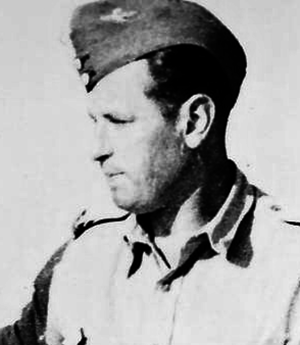
Pre WW2 Předválečné období

Josef Pavelka was born on 23 September 1913 in Velké Pavlovice, one of six children. He attended the Air Force Vocational Training School at the military academy in Prostějov between 1931 and 1933 and, on graduation, was assigned to the 2nd Aviation Regiment. At the time of the German occupation in March 1939 Josef had been promoted to sergeant and transferred to the 5th Aviation Regiment in Brno.
Josef Pavelka se narodil 23. září 1913 ve Velkých Pavlovicích jako jeden ze šesti dětí. V letech 1931 až 1933 navštěvoval Leteckou odbornou školu při vojenské akademii v Prostějově a po jejím ukončení byl přidělen k 2. leteckému pluku. V době německé okupace v březnu 1939 byl Josef povýšen do hodnosti četaře a převelen k 5. leteckému pluku v Brně.
Escape to Poland Útěk do Polska
Josef became disenchanted with the situation in Nazi-controlled Czechoslovakia, and by the summer he had made up his mind to leave the country.
Josef byl zklamán situací v nacisty ovládaném Československu a v létě se rozhodl opustit zemi.
“I remember that gloomy day, like a terrible dream, when nature itself wept over the fate of our homeland. I’m standing in the small hall of the Brno barracks. But it’s not a dream, it’s a harsh reality. Two German flags are flying. My hands are clenched in my fists. The decision was made to leave and wash away the shame. It was on June 14, 1939. I went home at about ten o’clock. My mother handed me a telegram, full of eagerness. It was quite an innocent telegram with this wording ‘Tomorrow at eight o’clock’, and we said farewell. Mother, poor thing, cried, father understood me, kissed me on both cheeks, made a cross on my forehead and said: ‘God give you luck and come home safely to us“.
„Pamatuji si ten pochmurný den, jako hrozný sen, kdy sama příroda plakala nad osudem naší vlasti. Stojím v malé hale brněnských kasáren. Ale není to sen, je to krutá realita. Vlají dvě německé vlajky. Ruce mám zaťaté v pěst. Padlo rozhodnutí odejít a smýt hanbu. Bylo to 14. června 1939. Domů jsem šel kolem desáté hodiny. Maminka mi podala telegram plný dychtivosti. Byl to docela nevinný telegram s tímto zněním ‚Zítra v osm hodin‘ a rozloučili jsme se. Maminka, chudinka, plakala, otec mě pochopil, políbil mě na obě tváře, udělal mi křížek na čele a řekl: ‚Dej ti Bůh štěstí a vrať se nám v pořádku domů‘.
Along with five of his colleagues, Josef crossed the border into Poland on 15 June 1939. The five men were part of a stream of hundreds of Czechoslovaks trying to escape Nazi occupation with the hope of joining a free Czechoslovak resistance force abroad, but for the Polish authorities they were a nuisance.
Spolu s pěti svými kolegy překročil Josef 15. června 1939 hranici do Polska. Těchto pět mužů bylo součástí proudu stovek Čechoslováků, kteří se snažili uniknout nacistické okupaci s nadějí, že se připojí ke svobodným československým odbojovým silám v zahraničí, ale pro polské úřady byli na obtíž.
Disappointment in Poland Polské rozčarování
The Poles didn’t have the capacity to deal with such a sudden and large influx of refugees, and they had problems of their own. The result was that the men were herded together into a derelict army barracks at Male Bronowice, just outside Krakow, while the Polish government arranged with the French Consulate in Warsaw the possibility of asylum in France. The upshot of these discussions was that France would accept the refugees if they agreed to join the French Foreign Legion for five years. A condition of this agreement, drawn up in consultation with senior officers amongst the Czechs, was that in the event of the outbreak of war the Czechoslovaks would be released into the Free Czechoslovak army in France.
Poláci neměli kapacitu vypořádat se s tak náhlým a velkým přílivem uprchlíků a navíc měli své vlastní problémy. Výsledkem bylo, že muži byli nahnáni do opuštěných kasáren v Malých Bronowicích, nedaleko Krakova, zatímco polská vláda s francouzským konzulátem ve Varšavě domluvila možnost azylu ve Francii. Výsledkem těchto jednání bylo, že Francie uprchlíky přijme, pokud souhlasí se vstupem do francouzské cizinecké legie na pět let. Podmínkou této dohody, vypracované po konzultaci s vyššími českými důstojníky, bylo, že v případě vypuknutí války budou Čechoslováci propuštěni do svobodné československé armády ve Francii.
To France Směr Francie
“On August 1, 1939, we boarded the ship in Gdynia. After two days we docked in France, in Boulogne. I had already signed a five-year commitment to the Foreign Legion after the inspection parade in Poland. I was waiting for transport to Marseille and from there on to Algiers. Our transport was set for September 10th. That morning we were all boarded and ready to go. At about 10:00 a.m., a French Captain came and told us that from today no more transport would go to Africa, that we would be divided directly into air bases.
„1. srpna 1939 jsme nastoupili na loď v Gdyni. Po dvou dnech jsme zakotvili ve Francii, v Boulogne. Po inspekční přehlídce v Polsku jsem již podepsal pětiletý závazek do Cizinecké legie. Čekal jsem na transport do Marseille a odtud do Alžíru. Náš transport byl stanoven na 10. září. Toho rána jsme byli všichni naloděni a připraveni k odjezdu. Kolem 10:00 přišel francouzský kapitán a oznámil nám, že od dnešního dne už žádný transport do Afriky nevypluje, že budeme rozděleni přímo na letecké základny.

L’Armee d’Air Ve Francouzském letectvu

“Já jsem byl přidělen na leteckou základnu v Pau na jihu Francie.“
Josef arrived at the air base in Pau on 12 September 1939, where he began training pilots on French aircraft Potez, Hanriot and Bloch. On 2 October 1939 he at last got a chance to go to the Czech consulate in Paris to present his call-up papers. On 1 December 1939 he was promoted to Sergent-Chef [Flight Sergeant]. Josef was transferred to the bomber base at Chateauroux on 20 May 1940, following the start of the German invasion ten days earlier.
Josef dorazil na leteckou základnu v Pau 12. září 1939, kde začal s výcvikem pilotů na francouzských letadlech typů Potez, Hanriot a Bloch. 2. října 1939 se mu konečně naskytla příležitost dostavit se na český konzulát v Paříži a předložit povolávací listiny. 1. prosince 1939 byl povýšen na Sergent-Chef [rotmistra]. Josef byl 20. května 1940, po zahájení německé invaze o deset dní dříve, převelen na bombardovací základnu v Chateauroux.

Evacuation to England Evakuace do Anglie
But the confusion and the speed of the capitulation overtook the Czechoslovaks at Chateauroux. With no time to join in the defence of France, they waited for orders to retire to Bordeaux and join the exodus to England. On 20 June he sailed on the Karanan with a group of pilots under the command of Staff Officer Josef Schejbal, arriving in Falmouth three days later after an unforgettably rough crossing.
Zmatek a rychlost kapitulace však Čechoslováky v Chateauroux dostihly. Protože už neměli čas zapojit se do obrany Francie, čekali na rozkazy k ústupu do Bordeaux a připojení se k ústupu do Anglie. 20. června vyplul na lodi Karanan se skupinou pilotů pod velením štábního důstojníka Josefa Schejbala a o tři dny později dorazil po nezapomenutelně náročné plavbě do Falmouthu.
RAF
“On Sunday, June 23, 1940, we landed at the port of Falmouth. The next day we went to Liverpool, and after about ten days we moved to Cosford near Wolverhampton. Here all the Czech airmen were concentrated and formed into our famous air squadrons. Here we underwent medical examinations for the Royal Air Force, took the oath to the King of England, and were issued with our uniforms”.
„V neděli 23. června 1940 jsme přistáli v přístavu Falmouth. Následující den jsme se vydali do Liverpoolu a asi po deseti dnech jsme se přesunuli do Cosfordu u Wolverhamptonu. Zde byli soustředěni všichni čeští letci a formováni do našich slavných leteckých perutí. Zde jsme podstoupili lékařské prohlídky pro Královské letectvo, složili přísahu anglickému králi a byly nám vydány uniformy.“
311 Sqn 311. perut

Josef was officially designated a sergeant in the RAF and assigned to 311 Squadron, which flew Vickers Wellingtons from Honington in Suffolk. From 16 September 1940 the squadron moved to the satellite station at East Wretham a few miles away. After training, his first operation over enemy territory was on 16 December 1940 against Mannheim, a retaliatory raid in response to the recent destruction of Coventry. The raid included four aircraft from 311 Squadron. Josef was second pilot in KX-G (Wellington T2577). First pilot was Sgt Jan Křivda; the rest of the crew were navigator P/O Vladimír Nedvěd, wireless operator P/O Josef Doubrava, front gunner Sgt Jiří Janoušek and rear gunner P/O Jaromír Toul. East Wretham was a small airfield with a grass runway surrounded by pine trees. Fully loaded Wellingtons often struggled to clear the trees completely on take-off, clipping foliage on the way through, and it was vital to retract the undercarriage as soon as possible after leaving the ground.
Josef byl oficiálně jmenován seržantem v RAF a přidělen k 311. peruti, která létala na letounech Vickers Wellington z Honingtonu v hrabstvi Suffolk. 16. září 1940 se peruť přesunula na satelitní letiště v East Wretham, vzdálené několik mil. Po ukončení výcviku, se 16. prosince 1940 zúčastnil své první operace nad nepřátelským územím útokem na Mannheim, což byl odvetný nálet za nedávné zničení Coventry. Náletu se zúčastnily čtyři letouny z 311. perutě. Josef byl druhým pilotem v KX-G (Wellington T2577). Prvním pilotem byl Sgt Jan Křivda; zbytek posádky tvořili navigátor P/O Vladimír Nedvěd, radiotelegrafista P/O Josef Doubrava, přední střelec Sgt Jiří Janoušek a zadní střelec P/O Jaromír Toul. East Wretham bylo malé letiště s travnatou drahou obklopenou borovicemi. Plně naložené wellingtony se při vzletu často potýkaly s úplným překonáním stromů, cestou ulamovaly větve a tak bylo nezbytné co nejdříve po odstartování zasunout podvozek.

Crash Nehoda
On this occasion Sgt Křivda cleared the trees but was unable to reach the required normal cruising height for the aircraft. According to Josef’s testament afterwards, the starboard engine cut out during take-off. The prescribed procedure after take-off was to complete one circuit of the airfield to gain height and then set off on the flight course. Sgt Křivda put the Wellington into a turn, but on doing so caught the tops of the trees. The plane crashed just outside the perimeter of the airfield in between East Wretham and Wretham Hall and burst into flames. Both he and front gunner Jiří Janoušek died on impact. The wireless operator managed to clamber to safety through a hole in the fuselage. Pilot Officer Nedvěd dragged a semi-conscious Josef away from the burning wreckage and, as the bombs and ammunition began to detonate, he returned inside to rescue rear gunner Toul. At that moment a bomb exploded, throwing him clear but otherwise unharmed. By this time the rescue crew from the airfield had arrived and extricated Toul, but he died on the way to hospital.
Tentokrát Sgt Křivda stromy přelétl, ale nebyl schopen dosáhnout požadované normální letové výšky. Podle Josefova pozdějšího svědectví při vzletu vysadil pravý motor. Předepsaný postup po vzletu spočíval v provedení jednoho okruhu letiště pro nabrání výšky a následném nabrání letového kurzu. Sgt Křivda navedl Wellington do zatáčky, ale při tom zachytil o vrcholky stromů. Letadlo se zřítilo těsně za hranicí letiště mezi East Wretham a Wretham Hall a vzplálo. On i přední střelec Jiří Janoušek při nárazu zemřeli. Radiotelegrafistovi se podařilo vyškrábat se do bezpečí otvorem v trupu. P/O Nedvěd odtáhl napůl bezvědomého Josefa z hořícího vraku a i přes vybuchující bomby a munici se vrátil dovnitř, aby zachránil zadního střelce Toula. V tu chvíli explodovala bomba a odhodila jej, nezraněného, od letounu. Ve stejnou dobu dorazila záchranná posádka z letiště a Toula vyprostila, ale zemřel cestou do nemocnice.
An investigation into the cause of the crash revealed that Sgt.Křivda intended to retract the landing gear after take-off but instead accidentally extended the landing flaps. As a result, the laden plane was unable to climb, and as it turned back to the airfield it lost even more height, hit the trees and crashed. The accident claimed the lives of three Czechoslovak airmen, whose joint funeral took place on 20 December 1940 at All Saints Cemetery in Honington.
Vyšetřování příčin havárie odhalilo, že seržant Křivda měl v úmyslu po vzletu zatáhnout podvozek, ale místo toho omylem vysunul přistávací klapky. V důsledku toho naložené letadlo nemohlo stoupat a při otáčení zpět na letiště ztratilo ještě vic výšku, narazilo do stromů a havarovalo. Nehoda si vyžádala životy tří československých letců, jejichž společný pohřeb se konal 20. prosince 1940 na hřbitově Všech svatých v Honingtonu.
Hospital Hospitalizace
The injured Josef Pavelka was taken unconscious to Bury St. Edmunds where, in addition to burns to his face and hands, doctors found fractures in both legs and three lumbar vertebrae. From Bury he was transferred to the RAF hospital in Ely near Cambridge, where he spent the Christmas holidays and the first few months of 1941 incapacitated.
Zraněný Josef Pavelka byl v bezvědomí převezen do Bury St. Edmunds, kde mu lékaři kromě popálenin v obličeji a rukou zjistili zlomeniny obou nohou a tří bederních obratlů. Z Bury byl převezen do nemocnice RAF v Ely nedaleko Cambridge, kde strávil vánoční svátky a první měsíce roku 1941 upoután na lůžko.
“The commander and the boys from the squadron came to see me. I was lying in the RAF hospital in Ely near Cambridge. I learned from them that Honza Křivda, Toul and Janoušek remained there. Honour be to their memory; they were good boys and friends. You know, military camaraderie is a little different than in civilian life. When you realize that they are pulling you from a burning aeroplane that is full of avgas and bombs, tears flow down your face. I had an operation and my whole body was in plaster for a long time while I healed”.
„Přišel za mnou velitel a kluci z perutě. Ležel jsem v nemocnici RAF v Ely u Cambridge. Dozvěděl jsem se od nich, že tam zůstali Honza Křivda, Toul a Janoušek. Čest jejich památce; byli to dobří kluci a kamarádi. Víte, vojenské kamarádství je trochu jiné než v civilu. Když si uvědomíte, že vás vytahují z hořícího letadla plného benzínu a bomb, tečou vám slzy po tváři. Já jsem byl na operaci a celé tělo jsem měl dlouho v sádře, než jsem se uzdravil.“

111 OTU

Josef’s injuries were so severe that he didn’t return to duty with 311 Squadron until September 1943. By then the squadron had been transferred to Coastal Command at RAF Beaulieu on the south coast, searching for U-boats in the Bay of Biscay. Gradually the squadron was exchanging their outdated Wellingtons for Consolidated B-24 Liberators; gradually, because the crews were being sent piecemeal on conversion courses run by 111 OTU in the Bahamas. Josef’s turn came in December 1943 when he embarked on the Queen Mary for New York on a rough journey which left an indelible impression on him. From New York the crews went to the Nassau airfield of Oakes Fields on a convoluted train journey via Montreal and Miami. Josef and his crew’s training lasted from 7 February to 29 April 1944, though they were involved in an operation as well, on 25 April 1944.
Josefova zranění byla tak vážná, že se do služby u 311. perutě vrátil až v září 1943. Peruť byla mezitím převelena k pobřežnímu velitelství na základně RAF Beaulieu na jižním pobřeží, kde pátrala po ponorkách v Biskajském zálivu. Postupně peruť vyměňovala své zastaralé Wellingtony za Consolidated B-24 Liberátory; postupně, protože posádky byly po částech posílány na přeškolovací kurzy vedené 111.OTU na Bahamách. Na Josefa přišla rada v prosinci 1943, když se nalodil na Queen Mary do New Yorku na náročnou cestu, která v něm zanechala nesmazatelný dojem. Z New Yorku se posádky vydaly na letiště Oakes Fields v Nassau spletitou cestu vlakem přes Montreal a Miami. Výcvik Josefa a jeho posádky trval od 7. února do 29. dubna 1944, ačkoli se také zapojili do operace, která proběhla 25. dubna 1944.
“Once, towards the end of our stay in the Bahamas, I was given the task of patrolling with my own crew about 300 km east of the archipelago. We were to search for a missing plane with British aircrew who had not returned two days previously. We took off two hours after midnight, gained altitude and headed into space. To the right we could see the lights of Cuba and then nothing but darkness and a lot of water below us. It was not a very nice feeling. After an hour and a half, the navigator reported that someone was sending out SOS light signals, so I gave the order to return the signal by Aldis lamp: “Are you in the boat?” Immediately we got the answer “Yes-yes”. However, that was the only and last message. The connection was interrupted. I connected the radio altimeter and went with the aircraft close above the surface. We dropped the signal bombs and reported the position back to base. The order came back to stay in space, fly over the place and broadcast a series of “V’s” and position on medium waves at intervals so that the ground station could take a bearing. We were still flying in space, maybe an hour, maybe longer, knowing that there were friends somewhere down there”. During the night and the following day more aircraft joined in the search, but Josef’s crew was the only one to establish contact and the missing crew was never found.
„Jednou, ke konci našeho pobytu na Bahamách, jsem dostal za úkol hlídkovat s vlastní posádkou asi 300 km východně od souostroví. Měli jsme hledat ztracené letadlo s britskou posádkou, které se před dvěma dny nevrátilo. Vzlétli jsme dvě hodiny po půlnoci, nabrali výšku a zamířili do prostoru. Napravo jsme viděli světla Kuby a pak už jen tmu a spoustu vody pod námi. Nebyl to moc příjemný pocit. Po hodině a půl navigátor hlásil, že někdo vysílá světelné signály SOS, a tak jsem dal rozkaz k odpovědi lampou Aldis: „Jste v člunu?“ Okamžitě jsme dostali odpověď „Ano-ano“. To však byla jediná a poslední zpráva. Spojení bylo přerušeno. Připojil jsem rádiový výškoměr a letěl s letadlem blízko nad hladinou. Shodili jsme signální bomby a hlásili polohu zpět na základnu. Přišel rozkaz zůstat ve prostoru, přeletět nad místem a v intervalech vysílat sérii „V“ a polohu na středních vlnách, aby pozemní stanice mohla polohu zaměřit. Stále jsme létali v prostoru,možná hodinu, možná déle, s vědomím, že tam někde dole jsou přátelé.“ Během noci a následujícího dne se do pátrání zapojila další letadla, ale Josefova posádka byla jediná, která navázala kontakt, ale pohřešovaná posádka nebyla nikdy nalezena.
Return to 311 Sqn Zpátky u perutě
At the end of June 1944 Josef returned to England and 311 Squadron. The squadron had moved to Predannack in Cornwall, now fully equipped with Liberators but still operating over the Bay of Biscay. On 8 August the squadron was moved up to Tain in Scotland. The squadron’s new operational area was mainly the North Sea, but aircraft often ventured over the Baltic and as far north as the Arctic Circle. The operations were twofold: to escort merchant ships to the Russian ports of Murmansk and Archangel, and to search out and destroy German U-Boats. Josef’s first anti-submarine flight was on 15 August, and by the end of November he had completed sixteen flights as first pilot. On 29 October his was one of three Liberators from 311 Squadron sent to destroy U-Boat U1060 beached on the Norwegian island of Fliena, which had already been crippled by members of Fleet Air Arm. One of the three planes crashed soon after take-off, but the other two, piloted by Josef and Squadron Leader Alois Šedivý, reached the target. Second pilot F/Lt Jiří Osolsobě recalled the initial engagement.
Koncem června 1944 se Josef vrátil do Anglie k 311. peruti. Peruť se přesunula na letiště Predannack v Cornwallu, nyní už plně vybavená Liberátory, ale stále operující nad Biskajským zálivem. 8. srpna byla peruť přesunuta do Tainu ve Skotsku. Novou operační oblastí perutě bylo převážně Severní moře, ale letadla se často odvážila přes Baltské moře a až k polárnímu kruhu. Operace byly dvojí: doprovod obchodních lodí do ruských přístavů Murmansk a Archangelsk a vyhledávání a ničení německých ponorek. Josefův první protiponorkový let se uskutečnil 15. srpna a do konce listopadu absolvoval šestnáct letů jako první pilot. 29. října byl jeho Liberátor jedním ze tří Liberátorů z 311. perutě vyslaných ke zničení ponorky U1060 uvízlé na pobřeží norského ostrova Fliena, která již byla poškozena příslušníky Fleet Air Arm. Jedno ze tří letadel se zřítilo krátce po vzletu, ale další dvě, pilotované Josefem a velitelem letky Aloisem Šedivým, dosáhly cíle. Druhý pilot F/Lt Jiří Osolsobě vzpomíná na první útok.
“Flight Engineer Miloš Říkovský primed the RPs (rocket projectiles) and confirmed they were ready to launch. Josef pushed the aircraft into a sharp dive. From a thousand feet I began to count down the height out loud so that the pilot, who had to observe the target, could pull the aircraft out of the dive. The altimeter was spinning fast, and I warned Josef it was high time to pull out. The red light on the instrument panel indicated that the rockets had been fired from the bomb bay under the fuselage, and we heard the deafening hiss and saw the vapour streaks they left behind as we levelled off. With a rising turn to the left we gained height for the next attack”.
„Palubní inženýr Miloš Říkovský odjistil RP (raketové projektily) a potvrdil, že jsou připraveny k odpálení. Josef strhnul letadlo do prudkého střemhlavého letu. Z výšky tisíce stop jsem začal nahlas odpočítávat výšku, aby pilot, který musel pozorovat cíl, mohl letoun z klesání vytáhnout. Výškoměr se rychle otáčel a já Josefa varoval, že je nejvyšší čas. Červená kontrolka na přístrojové desce signalizovala, že rakety byly odpáleny z pumovnice pod trupem, a my jsme slyšeli ohlušující syčení a viděli pruhy páry, které po sobě zanechávaly, zatimco se letoun vyrovnával. Stoupající zatáčkou doleva jsme nabrali výšku pro další útok.“
A full account of the attack is described in Pavel Vančata’s book ‘311 Squadron’: “F/O J Pavelka, commanding Liberator V FL949/Y, scored seven hits on the U-Boat with RPs: ‘Between 09.03 and 09.40hrs Y made 7 runs over target attacking with 16 RPs in 4 salvoes of 4 and 4 DCs (depth charges), 1 single and 1 stick of 3. After the attack an oil patch about 15×20 yds appeared and was seen to spread further. Pieces of wreckage and bright red objects also seen’. Squadron Leader A Šedivý DFM (Distinguished Flying Medal), flying Liberator BZ723/H, then added eight more RP hits: ‘During the first run the RP sights became U/S (unserviceable) but in spite of the defect the Capt. attacked with the first salvo of 4 RPs from 300 ft at a distance of 300 yds. The RPs were seen to overshoot to port. In the same run 4 DCs, spaced at 50ft, were dropped from 50 ft. All 4 seen to enter the water, No. 1 and 2 straddling the U/B abaft the C/T (conning tower), but only 3 DCs were seen to explode. Cely útok je popsán v knize Pavla Vancaty „311. peruť“.
„F/O J Pavelka, velící Liberátoru V FL949/Y, zaznamenal na ponorce sedm zásahů RP: ‚Mezi 9:03 a 9:40 hodinou „Y“ provedla 7 útoků na cíl s 16 RP ve 4 salvách po 4 a 4 DC (hloubkové nálože), 1 samostatnou a 1 sérii 3. Po útoku se objevila olejová skvrna o rozměrech asi 15×20 yardů, která se dále šířila. Byly také vidět kusy vraku a jasně červené objekty.‘ Velitel perutě A. Šedivý DFM (Distinguished Flying Medal), pilotující Liberátor BZ723/H, poté přidal dalších osm zásahů RP: ‚Během prvního útoku se zaměřovače RP staly neprovozuschopnými (U/S), ale i přes závadu kapitán zaútočil první salvou 4 RP ze vzdálenosti 300 stop a z výšky 300 yardů. Bylo pozorováno, ze rakety přelétly doleva. Během stejného letu byly z výšky 50 stop shozeny 4 DC, rozmístěné ve vzdálenosti 50 stop. Všechny 4 byly spatřeny při vstupu do vody, č. 1 a 2 na zádi po stranách velitelské věže (C/T) ponorky , ale byly zaznamenany pouze exploze 3 DC.
In the second run the RPs were fired from 200 ft. At a range of 200 yds. All four RPs hit the hull, below the C/T, ripping off plating, and causing damage at the point of exit. In the third run RPs were released from 200 ft at a distance of 200 yds, hitting the U/B at the waterline, abaft the C/T. The fourth RP attack was delivered from 150 ft at a range of 150 yds. All these RPs overshot. Two more runs were made over the target for the purpose of taking photographs. Later, the mortally wounded U-Boat was destroyed by an attack by two Halifaxes of 502 Squadron.
Při druhém útoku byly střely vypáleny z výšky 200 stop. Na vzdálenost 200 yardů. Všechny čtyři střely zasáhly trup pod velitelskou věží, strhly plátování a způsobily poškození v místě výstupu. Při třetím náletu byly střely vypáleny z výšky 200 stop na vzdálenost 200 yardů a zasáhly ponorku na čáře ponoru za velitelskou věží. Čtvrtý útok střelami byl proveden z výšky 150 stop na vzdálenost 150 yardů. Všechny tyto střely přeletěly cíl. Další dva útoky byly provedeny nad cíl za účelem fotografování. Později byla těžce poškozená ponorka zničena útokem dvou Halifaxů z 502. perutě.

In the spring of 1945 Josef was transferred to London after a medical check advised he be stood down from operational flying. He had completed 305 hours of operational flying. Finally, on 10 June 1945, he and S/Ldr Václav Korda flew two Avro Ansons from London Croydon to Prague Ruzyně, landing on 14 June after a stopover in Brussels. “We were all in a festive mood, full of anticipation, what and how will it be at home? We are returning to our native land after six years of war to hug those we said goodbye to when we left for the unknown. Will they still be among the living? How will we be received by our native land for which half of our boys fell?” Among those he returned to, was the girl from Olomouc he’d first met in 1936, Emilia Endlová. They were married in Olomouc cathedral on 14 August 1945.
Na jaře roku 1945 byl Josef převelen do Londýna poté, co lékařská prohlídka doporučila jeho vyřazení z operačního létání. Nalétal 305 operačních hodin. 10. června 1945 konečně spolu s S/Ldr Václavem Kordou letěli dvěma letouny Avro Anson z londýnského Croydonu do pražské Ruzyně, kde přistáli 14. června po mezipřistání v Bruselu. „Všichni jsme byli ve slavnostní náladě, plní očekávání, co a jaké bude doma? Po šesti letech války se vracíme do rodné země, abychom objali ty, s nimiž jsme se loučili, když jsme odcházeli do neznáma. Budou ještě mezi živými? Jak nás přijme rodná země, za kterou padla polovina našich chlapců?“ Mezi těmi, ke kterým se vrátil, byla i dívka z Olomouce, kterou poprvé potkal v roce 1936, Emilia Endlová. Vzali se v olomoucké katedrále 14. srpna 1945.
Return to Czechoslovakia Návrat domů

Josef stayed in the air force flying Junkers Ju52 transport aircraft on the routes Prague-Brno-Bratislava and Brno-Ostrava until transport operations ceased on 14 February 1946. He was promoted to the rank of captain in November 1945. Following his discharge from the armed services on 1 March 1946, Josef worked as a civilian employee at Brno airport, which lasted until the repression of servicemen from the West began after February 1948. He found employment in the tax office at Hustopeče, and helped out at the National Committee in Velké Pavlovice until he was forced to retire due to ill health.
Josef zůstal u letectva a létal s transportními letouny Junkers Ju-52 na trasách Praha-Brno-Bratislava a Brno-Ostrava až do ukončení dopravních operací 14. února 1946. V listopadu 1945 byl povýšen do hodnosti kapitána. Po propuštění z ozbrojených sil 1. března 1946 pracoval Josef jako civilní zaměstnanec na brněnském letišti, kde působil až do zahájení represí proti vojákům ze Západu po únoru 1948. Našel si zaměstnání na finančním úřadě v Hustopečích a pomáhal na Národním výboru ve Velkých Pavlovicích, dokud nebyl ze zdravotních důvodů nucen odejít do důchodu.
After Communism Po pádu komunismu

After rehabilitation in 1990, Josef was one of the first fifty to receive the Order of Milan Rastislav Štefánik from President Havel on 10 May 1991. On 28 March 1996 he was among the RAF veterans who met Queen Elizabeth II of Great Britain when she visited Brno. Josef died on 13 March 1997 aged 84 in his native Velké Pavlovice and was buried there with full military honours.
Po rehabilitaci v roce 1990 byl Josef jedním z prvních padesáti, kteří 10. května 1991 obdrželi od prezidenta Havla Řád Milana Rastislava Štefánika. Dne 28. března 1996 byl mezi veterány RAF, kteří se setkali s britskou královnou Alžbětou II. při její návštěvě Brna. Josef zemřel 13. března 1997 ve věku 84 let ve svých rodných Velkých Pavlovicích, kde byl pohřben se všemi vojenskými poctami.
Medals Awarded
Josef Pavelka’s military awards include the following:
Vojenská vyznamenáné Josefa Pavelky:
1939 – 45 Star
Atlantic Star
Air Crew Europe Star
Defence Medal
1939-45 War Medal
Válečný kříž 1939 and bar
Za chrabrost
Za zásluhy I.stupně
Pamětní medaile se štítky F–VB
Remembered
Czech Republic:
Česká republika:
Prague 1 – Klárov:
Praha 1 – Klárov:
In November 2017, his name, along with the names of 2533 other Czechoslovak men and women who had served in the RAF during WW2, was unveiled at the Winged Lion Monument at Klárov, Prague.
V listopadu 2017 bylo jeho jméno spolu se jmény dalších 2533 československých mužů a žen, kteří během 2. svět. války sloužili v RAF, odhaleno u pomníku Okřídleného lva na pražském Klárově.

Velké Pavlovice
In Velké Pavlovice, on 15 April 2012, the 67th anniversary of the liberation of Velké Pavlovice from Nazi occupation, a memorial plaque commemorating Josef Pavelka, was unveiled. The plaque is located on the building the Elementary School he attended in Velké Pavlovice.
K 67. výročí osvobození Velkých Pavlovic od nacistické okupace byla 15. dubna 2012 v jeho rodných Velkých Pavlovicích odhalena pamětní deska připomínající Josefa Pavelku. Pamětní deska je umístěna na budově velkopavlovické základní školy, do které Josef chodil.

Discover more from Free Czechoslovak Air Force Associates ltd
Subscribe to get the latest posts sent to your email.
